How to Use a Floor Jack and Jack Stands
Loosen the lug nuts first, raise the car at its jacking point with the floor jack, slide the jack stands under the frame, and lower the jack so the stands carry the weight. Never put any part of your body under a car held only by a jack.
On this page (6 sections)
You need two tools to lift a car safely: a floor jack to raise it and jack stands to hold it. Loosen the lug nuts while the car is still on the ground, lift at the correct jacking point, set the stands under the frame, and let the stands carry the weight before you reach under the car.
The order matters more than the gear. A jack is a lifting tool, not a support, so the stands do the holding while you work.
Here's the full sequence, plus what to check before, during and after the lift.
What do you need before lifting a car?
A floor jack, a pair of jack stands, wheel chocks and a lug wrench cover the basic job. Add a hard flat surface and a good light, and you're ready to start.
Your car's owner's manual lists the jacking points and the recommended stand locations. Read those pages before you touch a tool.
The points are usually reinforced seams or subframe areas, not plastic trim or the oil pan. Picking the wrong spot is the fastest way to bend a panel or crush a line.
Check the jack's capacity against your car's weight. A 3-ton floor jack handles most cars and light SUVs with margin to spare.
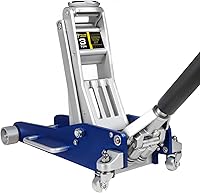
The YELLOW JACKET 3 Ton Full Aluminum Floor Jack has a 6,600 lb capacity and a lifting range of 3.75 to 18.9 inches, so it reaches both low sedans and taller vehicles.
Set the car on concrete or asphalt, never gravel or a slope. Put chocks behind the wheels that stay on the ground and loosen the lug nuts a quarter turn before the wheels leave the floor.
Loosening them later, while the wheels spin free, gives you nothing to push against.
The aluminum frame matters more than it sounds. The YELLOW JACKET weighs 57.8 pounds and measures 25.6 x 12.6 x 6.3 inches, so one person can carry it from the trunk to the driveway without straining.
A lighter jack is also easier to slide under the car without scraping the rocker panel.
How do you lift a car with a floor jack?
Slide the jack under the jacking point, pump until the saddle meets the car, then keep pumping until the wheels clear the ground. Go slow and watch the saddle stay centered as the car rises.
Set the jack at the right point
Line the saddle up under the reinforced point from your manual. A rubber saddle like the one on the YELLOW JACKET helps it grip instead of slipping on the seam.
Check the fit from the side before you pump.
Keep the handle clear of the car's body as it rises. The jack rolls as it lifts, so let the casters move instead of forcing the handle.
The YELLOW JACKET runs on two swivel rear casters and two front rollers, and that pair of swivels is what lets the jack swing and steer as the saddle travels up.
Raise the car in smooth strokes
Pump in steady strokes and stop when the tires clear the floor by an inch or two. You only need enough height to slide the stands under the frame.
A dual-piston jack like the YELLOW JACKET lifts in fewer strokes, which makes the job quicker without changing the sequence.
Watch the car for any tilt or rock as it comes up. If something feels unstable, lower it and reset the saddle.
Stop and reset rather than pumping harder.
Watch the load limit
The YELLOW JACKET carries a load limiting system that kicks in when the jack is overloaded. That is a backup, not a license to exceed the rating.
Know your car's weight and stay under the 6,600 lb figure, and the protection stays dormant.
How do you place jack stands safely?
Put each stand under a solid part of the frame, raise the saddle to meet the car, and lock the ratchet bar in place. The stands, not the jack, carry the car from here.
Position the stands at the points your manual lists, spread apart for stability. The BIG RED T43202 pair has a 3-ton capacity and adjusts from 11-1/4 to 16-3/4 inches.
Its ratchet bar locks into a sawtooth design, so you can set the height to meet the frame without guessing.
Set the stand height so the saddle touches the frame before you release the jack. If the saddle sits below the frame, raise the stand a notch.
Once both stands are set, lower the jack slowly until the car rests on the stands. The floor jack vs jack stands comparison explains why each tool has its own job.
The BIG RED stands are built from forged steel with a welded frame and a wide pyramid foot base. That base is what keeps the stand from tipping when the car shifts on it.
The large saddle surface spreads the load over more of the frame instead of digging into one spot. A double locking pawl holds the ratchet bar in place on top of the tooth design, so the height you set stays set.
Check the setup before you go under
Shake the car gently and watch for movement. The stands should sit flat and the saddles should hold the frame without wobble.
Leave the jack in place as a backup under the lifting point, but don't rely on it for support. If the car rocks at all, raise it again, reset the stands and lower it back down.
How do you lower the car when the job is done?
Raise the car off the stands with the jack, pull the stands out, then lower the jack slowly until the wheels touch the floor. Do it one end at a time and keep your hands clear.
Pump the jack until the car clears the stand saddles, then slide the stands out. Lower the jack in small steps and let the car settle evenly.
Our guide to how to lower a floor jack covers the slow release in detail.
Tighten the lug nuts in a star pattern once the car is back on the ground. Check them again after the first drive.
Torque them in stages rather than all at once on the first nut, so the wheel seats flat against the hub.
The last part of the job is the part people skip. Wipe the jack and stands down, check the ratchet teeth for wear, and store both upright.
A stand with a worn pawl is not a stand you want under a car.
How do you pick the right floor jack for your car?
Match the jack's capacity to your car's weight and its height range to your ground clearance. A low car needs a low start height, and a taller SUV needs more lift.
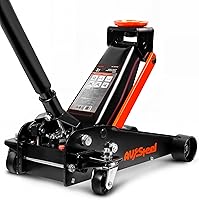
The AV Steel 3 Ton Low Profile Dual Piston Floor Jack starts at 3-1/8 inches and reaches 19-7/8 inches, with a 6,600 lb capacity. That low start suits cars with limited clearance, and the dual pump lifts with fewer strokes.
Check your car's weight against the capacity and your clearance against the start height. The AV Steel jack also has a saddle that rotates a full 360 degrees, so you can line it up under an awkward jacking point without fighting the handle.
It meets ANSI/ASME PASE safety standards. Jack weight also matters if you lift it in and out of storage.
Our guide to how much a floor jack weighs helps you plan storage and lifting.
Compare the three tools at a glance
| Tool | Capacity | Lifting range | Material |
|---|---|---|---|
| YELLOW JACKET 3 Ton | 6,600 lbs | 3.75 to 18.9 in | Aluminum |
| AV Steel 3 Ton Low Profile | 6,600 lbs | 3-1/8 to 19-7/8 in | Alloy steel |
| BIG RED T43202 stands | 6,000 lbs | 11-1/4 to 16-3/4 in | Steel |
The stands carry less than either jack on paper, and that is normal. A pair of stands holds one end of the car, while the jack lifts the whole corner or end.
Check the stand rating against the weight that actually rests on each stand, not the full car weight.
What mistakes should you avoid?
Never work under a car held only by a jack, and never use stands on soft ground. These two mistakes cause most of the serious accidents with home car lifting.
Other common errors: lifting at a plastic panel or the oil pan, setting the stands too low so the car rocks, and forgetting the chocks. Keep the jack's handle and your body clear as the car rises.
Do not let anyone stand beside the car while it is going up either.
Check the jack's oil level and the stands' ratchet teeth before each use. Store both tools upright and dry.
Our guide to how to store a floor jack keeps the jack and stands in good shape between jobs. A jack that sits on its side or in damp air can lose oil or rust at the pump, and the stands' teeth are the one part you cannot afford to neglect.
Frequently asked questions
Do I need jack stands if I have a floor jack?
Yes. A floor jack lifts a car but doesn't hold it up safely for long.
Jack stands are the only thing that should support the car while you work under it.
Where should I place a floor jack under my car?
Use the jacking points in your owner's manual, usually a reinforced seam or subframe area. Stay away from plastic panels, the oil pan and exhaust parts, which can bend or crush.
Can I use a floor jack on gravel or a slope?
No. Use a hard, flat surface like concrete or asphalt.
A jack can sink into gravel or roll on a slope, so move the car to level ground before lifting.
How do I lower a car off jack stands?
Raise the car just enough to clear the stands, remove them, then lower the jack slowly and evenly. Lower one end at a time and keep everyone clear of the car.