How Long Do Floor Jacks Last?
A floor jack typically lasts 5 to 10 years in home use. Seals, fluid condition and storage decide most of that life, not the brand. Jacks kept indoors and bled of air last longest.
On this page (6 sections)
A floor jack typically lasts 5 to 10 years in home use. Seals, fluid condition and storage decide most of that life, not the brand.
Jacks kept indoors and bled of air last longest.
The steel and aluminum around the hydraulic cylinder rarely fails first. The seals that hold the oil under pressure do, and they wear out faster when grit gets into the fluid or when the jack sits in sun and damp.
A budget-friendly jack cared for indoors can outlast a heavier one left on a patio.
What decides how long a floor jack lasts?
The hydraulic seals are the clock. They keep the oil trapped under pressure, and once one leaks the jack loses lift or sags under load.
Most of the wear comes from grit in the fluid and from long storage in bad conditions.
Rubber and polyurethane seals harden when they cycle through heat and cold. A jack left in a garage that bakes in summer and freezes in winter ages faster than one in a climate-controlled space.
UV light from direct sun does the same to the handle grip and any exposed rubber.
Fluid quality matters too. Hydraulic oil picks up dust when the fill plug is open or the piston is exposed.
That grit scratches the cylinder wall and chews the seals from the inside. The fix is simple: keep the piston wiped and the fill plug tight.
Use the jack within its rated capacity. A 2 ton jack pushed past its limit on a heavy SUV stresses the pump and seals with every stroke.
That is the fastest way to shorten a jack's life.
The parts that wear out first
The main seal at the base of the ram usually goes before anything else. A second seal sits on the pump piston, and the release valve has its own small O-ring.
The AV Steel 4 ton has a built-in safety valve that opens when the load goes past 4 tons, which guards the frame but does not spare the seals from steady overloading. The Yellow Jacket 3 ton carries the same kind of load limiting protection.
These valves stop a sudden failure, but every stroke near the limit still works the rubber. A weeping main seal shows up as oil around the base of the ram or a slow drop over a few minutes.
Replacing the seal is the cheap fix, provided the ram is still smooth.
How long do floor jacks last in home use?
Home owners usually get 5 to 10 years from a floor jack used for tire swaps, brake jobs and the occasional oil change. The count is in jobs and storage, not the calendar.
A jack used a few times a year indoors often reaches the top of that range.
The lower end shows up in hard use. A jack that lifts several vehicles a week, stays in an unheated shed and gets topped up with whatever oil is handy will show seal trouble within 2 to 3 years.
The load rating matters here: a 3 ton aluminum jack working near its limit wears faster than a 4 ton steel jack doing the same job.
A 57.8 lb aluminum jack like the Yellow Jacket is easy to carry indoors, and that alone helps. The AV Steel 4 ton weighs 87.3 lb, so it tends to stay on the garage floor.
Moving a heavy jack inside every time is a chore, but the 4 ton rating gives you headroom.
How much the jack weighs affects storage more than life. See how much does a floor jack weigh to compare aluminum and steel before you buy.
Which habits shorten a floor jack's life?
Overloading, dropping the car fast, and storing it dirty are the three big ones. Each one puts extra strain on the seals or lets grit reach the cylinder.
Lifting past the rated capacity is the most common. People grab a 2 ton jack for a full-size truck because it was inexpensive, and the pump has to work harder every time.
The load limiting valve may protect the frame, but the seals still see the extra pressure.
Letting the car down in one fast drop spikes pressure in the cylinder. Lowering slowly takes a few extra seconds and spares the seals.
Our guide to how to lower a floor jack slowly and smoothly covers the release valve technique.
Leaving the jack raised under load for days is another quiet killer. Seals stay under pressure, and if one weeps, the car settles.
Lower the jack fully when the job is done.
Dirt is the last habit. A jack stored on a dusty garage floor collects grit on the saddle and piston.
Wipe both before and after use, and the cylinder stays cleaner. A large rubber saddle like the one on the Yellow Jacket also grips the lift point without slipping, so the load stays centred and the ram isn't pushed sideways.
How do you store a floor jack so it lasts longer?
Store it fully lowered, indoors and dry. That keeps pressure off the seals, blocks UV damage and stops moisture from rusting the piston.
A covered spot in a garage or shed beats a driveway or patio.
Lower the arm all the way down before you put the jack away. A raised jack keeps the hydraulic system pressurized, and a slow leak leaves the arm sagging over weeks.
Fully down, the seals relax.
Keep the jack off bare concrete if the floor gets damp. A scrap of plywood or a rubber mat under the wheels helps.
Wipe the piston with a dry cloth and a drop of light oil to stop surface rust. The foam bumper on the Yellow Jacket handle and its side handle both help here, since you can carry it without gripping the ram or the saddle.
Bleed air from the cylinder after moving or tipping the jack. Air in the fluid makes the lift feel spongy and the pump noisy.
Open the release valve fully and pump the handle several times with no load to push the air out. Swivel rear casters and sturdy front rollers make a heavy jack easier to roll into a dry corner instead of leaving it out.
Our guide to how to store a floor jack has the full routine, including wall mounting and weather protection.
What should you check to spot a jack near the end?
Watch for a spongy lift, a slow sag and oil on the piston. Those three signs usually mean the seals or fluid are failing.
A jack that sags under load should come out of service until it's fixed.
A spongy pump often means air in the fluid. Bleed it and top up the level before assuming the jack is dead.
Oil weeping around the piston or the release valve points to a worn seal. Rebuild kits exist for many models, but check the kit cost against a new jack before you spend.
Rust pitting on the piston is a stop sign. Pitted metal tears new seals, so a rebuild won't last.
Bends in the frame or a cracked weld mean the jack is scrap, whatever the hydraulics look like.
Test any jack before it goes back under a car. Raise it partway, leave it under load for a few minutes, and watch for any drop.
A jack that holds steady is safe to keep using. Set the stands first, though.
The Big Red pair adjusts from 11-1/4 to 16-3/4 inches on a sawtooth ratchet bar with a double locking pawl, so the car stays put while you work under it. Note that the stands are rated for cars and not for SUVs or trucks.
Should you buy a jack that's built to last?
Buy within your weight class and store it well. A jack rated well above the heaviest car you lift runs with headroom, and that headroom is years of seal life.
An aluminum body won't rust like steel, which helps in damp garages.
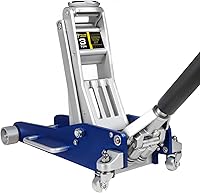
The Yellow Jacket 3 ton is the lighter choice. Its all-aluminum frame weighs 57.8 lb and lifts 3.75 to 18.9 inches, so it suits family cars, SUVs and light trucks.
The dual-piston pump raises the saddle with fewer strokes. Lighter means easier to carry indoors and store dry, which is the single best habit for a long life.
The 3 ton rating covers most family vehicles with room to spare, and the 3.75 inch minimum height lets it slide under a low car.
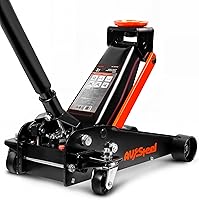
The AV Steel 4 ton is the heavier pick. At 87.3 lb it's a garage-floor jack, not one you carry upstairs.
The 8,000 lb rating gives heavy SUVs and pickups plenty of headroom. AV Steel covers it with a 12-month warranty.
Its rotating saddle helps you line up on a frame rail or diff. The 19-3/4 inch top lift reaches higher jack points on a lifted or heavy vehicle.
The 4-1/4 inch minimum is too tall for very low sports cars, and the maker says it isn't meant for RVs or heavy commercial trucks.
Whichever you pick, read what to look for in a floor jack before you order. Capacity headroom and a body that resists rust matter more than the badge for long-term life.
For most readers, an aluminum 3 ton jack stored indoors and bled after each move will run well into the 5 to 10 year range. Heavy-duty users should go up a capacity class and keep the jack off the floor.
Always set stands before you go under the car, and replace any jack that sags under load rather than repairing it a second time.
Frequently asked questions
What usually causes a floor jack to fail?
Seal wear and dirty hydraulic fluid cause most failures. Seals harden when a jack sits in sun or freezing temperatures, and grit in the fluid scratches the cylinder.
Overloading past the rated capacity and letting the jack down fast also speed up wear.
Can you make a floor jack last longer?
Yes. Store it fully lowered indoors, keep the fluid at the right level, bleed air from the cylinder after transport, and never exceed the rated capacity.
Wipe the piston and saddle clean after each job so grit doesn't reach the seals.
How often should you change floor jack fluid?
Many makers suggest a fluid change every 2 to 3 years in home use, or sooner if the jack feels spongy. Use the hydraulic jack oil the maker specifies.
A spongy lift or a slow drop often means low or aerated fluid rather than a failed jack.
When should you replace a floor jack instead of repairing it?
Replace it when the frame bends, the piston is scored or pitted, or a rebuild kit costs more than a new jack. A jack that drops under load or won't hold height after bleeding and topping up fluid should not go back under a car.
Does storing a floor jack outside shorten its life?
Yes, usually by years. Sun bakes the seals and temperature swings pull moisture into the hydraulic system.
Rust forms on the piston and frame.
A dry, covered spot indoors keeps a jack closer to its full 5 to 10 year potential.