Floor Jack vs Jack Stands: What Each One Does (October 2026)
A floor jack lifts a vehicle; jack stands support it after lifting. Use a jack to raise the vehicle, then place stands at approved support points before working underneath.
On this page (8 sections)
- Floor jack vs jack stands: what is each tool for?
- Which tool should you use for a repair?
- Can a floor jack hold a car safely by itself?
- Can jack stands lift a car?
- How do capacity and lift height affect the choice?
- What should you check before using either tool?
- Which should you buy first?
- Floor jack vs jack stands: which one does what?
A floor jack lifts a vehicle; jack stands support it after lifting. For under-car work, raise the vehicle with a suitable jack, then support it at approved points with correctly rated stands.
The tools do different jobs. A jack gives you height, while stands hold the vehicle at a working height without relying on the jack's hydraulic pressure.
You can compare their roles in this side-by-side tool guide, or browse our floor jack guide and jack stand and bottle jack guide for more options.
 Best for lifting a low vehicle
AV Steel 3 Ton Low Profile Dual Piston Floor Jack
 Best for separate support
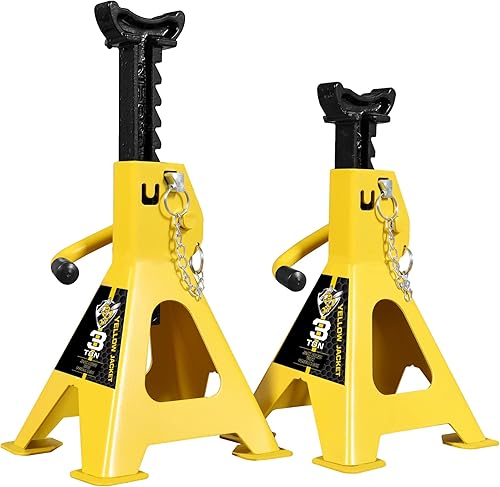
Yellow Jacket 3 Ton Double Locking Jack Stands
Floor jack vs jack stands: what is each tool for?
A floor jack raises the vehicle; jack stands hold it up. A floor jack has a wheeled frame, hydraulic pump and saddle that lifts at a suitable point.
Jack stands are separate supports with a base and a height-adjustable post or ratchet. After lifting, you position them at the vehicle maker's approved support points and lower the vehicle onto them.
A floor jack may be used to lift one end or side, depending on the vehicle and instructions. Stands are generally used in pairs to support the vehicle at two points, with placement based on the service procedure.
What does a floor jack do?
A floor jack creates lifting force when you pump its handle. The saddle contacts an approved lifting point, and the vehicle rises as the jack's arm extends.
The AV Steel floor jack has a 3 ton capacity, a 3-1/8 in minimum lift height and a 19-7/8 in maximum lift height. Its dual piston pump is designed to lift with fewer strokes.
A jack can be useful for tire changes and other jobs where the vehicle only needs to be raised briefly. For work underneath, the jack alone is not a stable support plan.
What do jack stands do?
Jack stands hold a raised vehicle at a fixed height. They don't lift from the ground, so you need a suitable jack or another lifting method to place the vehicle on them.
The Yellow Jacket pair has a 10-7/8 to 16-9/16 in height range and a double locking mechanism with a ratchet bar and metal safety pins. The stands have a 3 ton capacity; check the maker's guidance for the vehicle and how capacity ratings apply.
If you're unsure how tall your supports need to be, use our guide to choosing the right jack stand height.
Which tool should you use for a repair?
Use a floor jack to raise the vehicle and jack stands to support it while you work underneath. Pick equipment that matches the vehicle, the lift points and the job.
For a tire change, the owner's manual may specify a suitable lifting point and procedure. Follow it, and keep people clear of the raised vehicle.
For an oil change, inspection or other task beneath the vehicle, plan for stands before raising it. The vehicle needs enough clearance for the work, and the support points must be approved for the stands.
If you need a different lifting style, our floor jack vs scissor jack comparison explains how those tools differ. A bottle jack is another lifting option, but it also needs proper support for under-car work.
Can a floor jack hold a car safely by itself?
Don't rely on a floor jack alone to support a vehicle while you work underneath. Hydraulic pressure can change, and a jack can shift on an uneven or unsuitable surface.
Follow the vehicle's service instructions for lifting and support points. Use stands with a suitable capacity and height, on a firm, level surface, then lower the vehicle onto them as directed.
Keep the jack in place if the vehicle or equipment instructions call for it, but don't treat it as a substitute for stands. Never place any part of your body under a vehicle supported only by a jack.
Can jack stands lift a car?
No, ordinary jack stands support a vehicle that has already been raised. Their adjustable posts set the supported height, but they don't provide the lifting action needed to get the vehicle off the ground.
A typical sequence is to position a suitable jack at an approved lifting point, raise the vehicle, place stands at approved support points, then lower it onto the stands. Follow the exact sequence and points in the vehicle and equipment instructions.
An all-in-one unit is a different design. The Powerbuilt 620471 combines a bottle jack and stand, with a ratcheting safety bar that locks in the raised position.
Its stated capacity is 3,000 lb, so compare that with the vehicle and the intended support arrangement. Its 11 in minimum height may be too high for a low car.
How do capacity and lift height affect the choice?
Capacity and height both need to match the vehicle and the job. A capacity rating alone doesn't tell you whether a jack will fit under the vehicle or whether stands will reach the needed support points.
The AV Steel jack is rated for 3 ton and lifts from 3-1/8 to 19-7/8 in. The Yellow Jacket stands are rated for 3 ton and adjust from 10-7/8 to 16-9/16 in.
Those ranges describe different tasks: one is the jack's lift range, and the other is the stands' support height range. They don't mean the jack and stands should be used at their maximum heights or that every vehicle can be lifted to those heights.
The Powerbuilt Unijack has a 3,000 lb capacity and an 11 to 21 in range. Its capacity is lower than the other two products here, so don't assume that a matching “3 ton” label means equal capacity.
Read the vehicle manual and tool instructions before buying or lifting. For a deeper capacity explanation, see how much weight a 3 ton jack can lift.
What should you check before using either tool?
Check the vehicle's lifting and support instructions, the surface, the equipment ratings and the tool's condition. These checks help you avoid a poor fit or unstable setup.
Park on firm, level ground and secure the vehicle as directed by its manual. Avoid soft soil, slopes and surfaces that may shift under load.
Inspect the jack and stands before use. Don't use equipment with visible damage, missing parts or a lock that doesn't engage properly.
Use the jack saddle and stand tops only at suitable points for the vehicle. If you can't identify those points, consult the manual or a qualified mechanic before raising the vehicle.
Keep clear while raising and lowering. Once the vehicle rests on stands, check stability from outside the area underneath before beginning work.
Which should you buy first?
If you already have a suitable jack, buy stands that match your vehicle and work height. If you have neither, plan for both a lifting tool and a safe way to support the vehicle.
Choose a floor jack when you need a wheeled tool that can lift from a low starting height. The AV Steel model's 3-1/8 in minimum height is one example to compare with your vehicle's clearance.
Choose separate stands when you want a pair of supports after lifting. The Yellow Jacket stands offer a 10-7/8 to 16-9/16 in range, so check that this covers your vehicle's approved support height.
Choose the Powerbuilt Unijack if a combined bottle jack and stand suits your vehicle and its 3,000 lb capacity is appropriate. Its 11 in minimum height makes it a poor match for some low vehicles.
Pick the lifting tool by access and required height, then choose support equipment by the vehicle's approved points and the repair. For a focused stand buying guide, see which jack stands to buy.
Floor jack vs jack stands: which one does what?
A floor jack lifts; jack stands support. Use both roles in your plan whenever a job requires working beneath a raised vehicle.
Choose the floor jack for lifting access and height, then choose stands that fit the vehicle's support points and working height. Check the manual for the correct setup before you start.
Frequently asked questions
Can you work under a car with only a floor jack?
No. A floor jack is for lifting, and it can lose pressure or shift.
Once the vehicle is raised, support it on correctly rated jack stands at the vehicle maker's approved points, then confirm it is stable before going underneath.
Do jack stands lift a car?
Jack stands support a vehicle at a set height; they do not raise it from the ground. Use a suitable jack to lift the vehicle, position the stands at approved support points, and lower the vehicle onto them according to the instructions.
Should jack stands match the floor jack's capacity?
Check the vehicle maker's instructions and the capacity rating for each tool. A jack's capacity does not automatically make a pair of stands suitable, and capacity labels can be expressed per stand or per pair.
Confirm how the rating applies before use.
Can a bottle jack replace jack stands?
A standard bottle jack lifts a vehicle, so it should not be treated as a substitute for separate stands while you work underneath. An all-in-one unit such as the Powerbuilt Unijack combines a bottle jack and a locking support, but you still need to follow its instructions and capacity limits.
Where should jack stands go?
Place stands only at support points approved for your vehicle, as shown in its owner’s manual or service information. The right location varies by vehicle, and an unsuitable point can damage the vehicle or let it slip.


