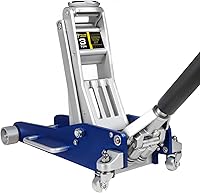
Floor Jack Types Explained
The main types of floor jacks are low-profile steel jacks, lightweight aluminum jacks, standard steel service jacks and jack-and-stand kits. Pick the type by the clearance under your car and its weight, then match the ton rating to what you lift.
On this page (8 sections)
- What are the main types of floor jacks?
- Low-profile steel jacks for lowered cars and tight gaps
- Aluminum and aluminum-steel jacks for easy carrying
- Standard steel service jacks for general garage work
- Jack-and-stand kits for a complete lift and support setup
- How do you choose between the types of floor jacks?
- What safety limits come with each type?
- Which type of floor jack should you buy?
The types of floor jacks fall into four practical groups: low-profile steel jacks, lightweight aluminum jacks, standard steel service jacks and jack-and-stand kits. The type you need depends on the clearance under your car and the weight you plan to lift.
A lowered sports car and a full-size sedan do not need the same jack. One needs a low saddle that slides under a tight gap, and the other needs a ton rating with margin to spare.
Get those two numbers right and the rest is detail.
This guide walks through each type in the order you are likely to meet it in a garage. It covers what each one is built for and the trade-offs you should know.
If you already know your jack type and just want to know how much it adds to your load, read how much does a floor jack weigh before you order.
What are the main types of floor jacks?
The four main types are low-profile steel, aluminum, standard steel service jacks and jack-and-stand kits. The type is set by two specs: minimum height and load capacity.
Low-profile jacks have a low saddle so they reach under cars with little ground clearance. Aluminum jacks are light enough to lift and carry, which matters if you work alone or move the jack between spots.
Standard steel service jacks sit in the middle: a moderate minimum height and a broad capacity range. Kits add two jack stands to the same purchase so lifting and supporting are covered.
Your first decision is not brand or color. It is whether your car's lowest jack point clears the saddle.
A 3 ton steel jack that will not slide under a lowered coupe is the wrong jack, no matter how good the rating looks.
Your second decision is capacity. A jack rated well above your car's weight gives you margin and less strain on the pump.
A jack rated just at the limit leaves nothing in reserve. Our rule: match the ton rating to your car and keep a cushion above it.
Every type here uses a hydraulic pump. The differences are in the frame material, the saddle height and what ships in the box.
We'll take each one in turn and name the reader it fits.
Low-profile steel jacks for lowered cars and tight gaps
A low-profile steel jack is the type to choose when your car sits close to the ground. It is a steel-framed hydraulic jack with a saddle low enough to slide under lowered vehicles, sports cars and cars with aftermarket body kits.
The Maxority 3 Ton Low Profile Steel Floor Jack is the one we would point a lowered-car owner to. Its saddle drops to a very low height, so it can reach under cars where a standard jack would scrape.
The long reach also helps when the lift point sits further in from the wheel edge.
The 6600 lb capacity covers heavy sedans and light trucks as well as cars. Maxority lists a 19.9 in maximum lift height, so there is room for taller vehicles once the saddle is under.
The dual-piston pump brings the saddle up in fewer strokes than a single pump.
Pick a low-profile steel jack when clearance is the limit, not weight. The steel frame adds heft, which is fine for a jack that stays in one garage.
If you plan to carry it up stairs or across a lot, the aluminum type below is the better fit.
Safety is a shared trait of this type. The Maxority saddle has a built-in overload valve and a stable saddle face to reduce slip while the car is up.
The jack still lifts only; jack stands hold the load.
If you store your jack in a corner, think about the frame size as well as the height. Our guide to how to store a floor jack covers the upright, wheeled and space-saving options.
Rule: if the saddle cannot slide under the jack point without a fight, it is the wrong jack. Measure the gap first and buy a low-profile model only when the standard type won't clear.
Aluminum and aluminum-steel jacks for easy carrying
An aluminum floor jack is the type for the reader who moves the jack often or works alone. Aluminum and aluminum-steel frames weigh less than all-steel jacks of similar capacity, so lifting them out of a trunk or carrying them between wheels takes less effort.
The BIG RED AT815016LR 1.5 Ton Aluminum and Steel Floor Jack shows the trade-off clearly. The frame mixes aluminum and steel to keep the jack lighter, and its 3.5 in minimum height clears many low cars.
The dual-piston pump lifts faster than a single pump, and the 14 in maximum height suits car work.
The 1.5 ton rating fits cars and smaller vehicles. BIG RED notes that SUVs or larger vehicles may be too heavy for this capacity, so this is a car-first jack.
The large rubber saddle and a foam bumper on the handle help protect paint and trim while you position it.
Mobility is the point of this type. Two universal casters and one wide-track front caster let the jack roll and pivot in tight spots.
A side handle helps you steer it into place without bending over the saddle.
Pick aluminum when the jack travels, whether between wheels in a driveway or between home and a friend's garage. It is also the friendlier type for a small storage shelf.
Our how much does a floor jack weigh guide helps you compare frame weights before buying.
Skip aluminum if your main job is a heavy truck or SUV. In that case the steel 3 ton type is the safer match, and the lower weight won't help you lift more.
Rule: choose aluminum only when carrying weight matters more than raw capacity. For a car that stays in one garage, the steel type gives more rating for the same money.
Standard steel service jacks for general garage work
A standard steel service jack is the type most home garages end up with. It is a steel hydraulic jack with a moderate saddle height and a broad range of ton ratings, built for routine wheel, brake and oil work on cars.
The Maxority 3 Ton Low Profile Steel Floor Jack covers this type too, since its steel frame and quick-lift pump suit everyday garage use. The 6600 lb rating leaves margin for most passenger vehicles, and the long reach gets the saddle to central lift points.
Standard steel jacks are heavier than aluminum, and that weight comes with stability. A wider base and a heavier frame sit more firmly on the floor while you pump.
The dual-piston pump on this model reduces the strokes needed to get the car up.
The 19.9 in maximum height is more than many cars need, which leaves room if your next vehicle is taller. The built-in overload valve stops the jack from lifting past its rating.
That protection matters more on a steel service jack because it is the type most likely to be asked to lift a heavy load.
Pick a standard steel service jack when you work at home on a range of vehicles. It is the all-rounder: enough height, enough rating and a stable base.
It is not the lightest type and not the lowest, but it covers most jobs without a compromise you'll notice.
If the pump ever feels weak or the car won't rise, the fix is usually simple. Our guide to why won't my floor jack lift walks through the common causes.
Rule: buy the highest ton rating you can store and lift, not the lowest that covers your car. Margin is what keeps a steel jack useful as your vehicles change.
Jack-and-stand kits for a complete lift and support setup
A jack-and-stand kit is the type to choose when you are setting up a garage from scratch. It pairs a hydraulic floor jack with two ratchet jack stands in one buy, so you have the tool that lifts the car and the tool that holds it.
The DNA Motoring 2 Ton Floor Jack and Stands Kit is the kit we would suggest for a first setup. It includes one 2 ton floor jack and two ratchet jack stands.
The jack lifts from 5.1 in to 13 in, and the stands adjust from 11 in to 17 in on a ratchet bar with a sawtooth lock.
The 2 ton rating suits cars up to 4000 lb. DNA Motoring notes that pickups, trucks and very large SUVs are too big for this kit, so it is a car kit.
The jack rolls on large steel casters and swivel casters for easy positioning. The stands use a wide pyramid foot base for a stable footprint.
The type matters here more than the brand. A kit saves you from buying the jack and the stands separately, and the two are rated to work together.
The kit's own note is the key safety point: the jack lifts only, and the stands hold the load for the whole time you are under the car.
Pick a kit when you have no jack or stands yet. It is the simplest way to cover both jobs and keep the ratings matched.
If you already own good stands, a standalone jack is the better buy.
Our guide to how to lower a floor jack slowly and smoothly covers the release technique that keeps a car from dropping when it comes down onto the stands.
Rule: never work under a car held only by a floor jack. A kit makes the stand step part of the same purchase, so there is no reason to skip it.
How do you choose between the types of floor jacks?
Choose by clearance first, weight second and portability third. That order settles the type for most readers in a few minutes.
Start with the gap under your car's jack point. If it is tight, only a low-profile type will do.
If there is room, a standard steel service jack gives you more capacity options. Next, weigh your car against the ton rating and add a margin.
Last, decide whether the jack stays in one place or travels.
Here is how the three products we'd pick line up on the specs that matter most.
| Jack | Type | Capacity | Minimum height | Maximum height |
|---|---|---|---|---|
| Maxority 3 Ton Low Profile | Low-profile steel | 3 ton (6600 lb) | Very low saddle | 19.9 in |
| DNA Motoring 2 Ton Kit | Jack and stand kit | 2 ton (4000 lb) | 5.1 in | 13 in |
| BIG RED AT815016LR 1.5 Ton | Aluminum and steel | 1.5 ton (3,000 lb) | 3.5 in | 14 in |
The kit pairs its jack with stands, so it covers the support step too. The other two are jacks alone.
If you choose one of those, plan to buy stands separately.
Our pick for most readers is the Maxority 3 Ton Low Profile. It covers the widest range of cars and gives the most margin.
It also reaches under low vehicles, so it handles jobs the kit and the aluminum jack would struggle with.
Pick the DNA kit if you need stands as well as a jack. Pick the BIG RED AT815016LR if you carry the jack between spots and drive a car rather than a truck.
Rule: decide the type before the brand. The clearance and rating numbers are what make a jack safe and useful.
The label on the frame is the last thing to weigh.
What safety limits come with each type?
Every type shares one limit: a floor jack lifts but never holds. The type changes how much load it can lift and how easily you position it, not what it is allowed to do.
The Maxority saddle includes an overload valve to stop lifting past its rating. The DNA kit's jack includes an overload protection valve as well.
The DNA stands use a locking lever for extra security on the ratchet bar. These features reduce risk, but none of them turns a jack into a stand.
The kit type makes the split clear because the stands ship in the same box. A standalone jack leaves the support step to you.
If your car will be up for more than a wheel change, the stands are not optional.
Low-profile jacks can tempt you to lift at a point the maker didn't intend just because the saddle fits there. Use the lift points your car's maker specifies, not the nearest gap the saddle reaches.
A low saddle makes access easier, not the lift point safer.
Aluminum jacks are lighter and easier to knock out of place, so set the casters straight and check the saddle seat before pumping. The BIG RED AT815016LR's rubber saddle helps grip, but you still confirm the seat by eye.
The kit's 2 ton rating is a real limit. Stay under it rather than testing it on a heavier vehicle.
DNA Motoring warns that its kit is not for pickups, trucks or very large SUVs, and that warning is part of the type's fit.
Rule: match the jack type to the car, then use stands every time. A jack rated far above your car does not remove the need to support it.
Which type of floor jack should you buy?
Buy the low-profile steel jack if your car sits low or you want one jack for a range of vehicles. For most readers, the Maxority 3 Ton Low Profile is the pick, because it reaches under low cars and carries a 3 ton rating.
Buy the DNA Motoring kit if you are starting from zero and need stands as well. Buy the BIG RED AT815016LR if carrying the jack matters and your car is within its 1.5 ton rating.
The types overlap more than the labels suggest. A low-profile steel jack can also be a standard service jack.
The question is which spec your car needs first. Measure the clearance, weigh the car and choose the type that clears both.
Once the type is settled, keep the jack working. A stored jack with a dirty pump or low fluid is the reason many jacks fail to lift.
Our guide to why won't my floor jack lift covers the fixes, and how to lower a floor jack slowly and smoothly keeps the car steady on the way down.
Take one last look at where the jack will live before you buy. A steel 3 ton jack needs more shelf room than an aluminum one.
Our guide to how to store a floor jack helps you plan the spot so the right type actually gets used.
Frequently asked questions
What ton rating do I need for a passenger car?
A 1.5 to 2 ton jack covers most cars. Pick 3 ton when you work on heavier vehicles or want extra margin.
Compare the jack's ton rating with the weight you plan to lift, and never lift more than the jack is rated for.
How low does a floor jack need to be for a lowered car?
The jack's minimum height must fit under your lowest lift point. A 3.5 in minimum clears many lowered cars and sports models.
Measure the gap under your car's jack point before you choose, and leave a little room so the saddle slides in without scraping.
Can a floor jack hold a car up while I work under it?
No. A floor jack lifts the car only.
Jack stands hold the load for the whole time you are under it.
A kit that pairs a jack with two stands gives you both jobs in one buy, and the jack stands take over once the car is up.
Is an aluminum floor jack strong enough for a heavy car?
Aluminum jacks are rated for a set capacity, so compare the ton rating with your car's weight rather than assuming steel is always stronger. An aluminum and steel jack at 1.5 ton suits cars, while a 3 ton steel jack handles heavier vehicles.
Stay within the rated capacity.
What is the difference between a floor jack and a bottle jack?
A floor jack rolls under the car on casters and lifts with a long handle, so it is easier to position and gives more lift per pump. A bottle jack stands upright and takes less floor space but is harder to slide under a low car.
Most home garages use a floor jack for wheel and brake work.