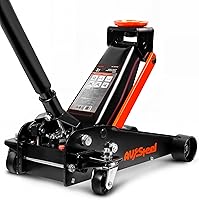
Why Won't My Floor Jack Lift?
A floor jack that won't lift often has its release valve open, trapped air, low hydraulic oil, or an overload. Check the manual and the jack's load rating, then troubleshoot with the vehicle supported safely.
On this page (7 sections)
- What should you check first when a floor jack won't lift?
- Why won't my floor jack pump up?
- Why does a floor jack lift but then sink?
- What if the jack lifts but won't raise the vehicle?
- How can you troubleshoot a floor jack safely?
- When should you stop using a floor jack?
- What should you do about a floor jack that won't lift?
A floor jack that won't lift often has an open release valve, trapped air, low hydraulic oil, or an overload. Check the manual and the jack's load rating, and keep the vehicle supported by properly placed jack stands whenever you work near or under it.
Start with the simple checks: confirm the jack is on a firm, level surface, the saddle is at the vehicle's approved lift point, and the release valve is closed as the manual directs. If the jack still won't raise the load, stop and inspect it before trying more force.
What should you check first when a floor jack won't lift?
Check the release valve, handle, load, and contact point before troubleshooting the hydraulics. Small setup problems can keep a working jack from lifting.
- Place the jack on a firm, level surface.
- Confirm the vehicle is at the correct lift point.
- Check that the jack's rating is suitable for the load.
- Make sure the handle is fully seated and moves the pump.
- Close the release valve as directed by the manual.
Don't guess at the valve's direction or force it. Jack designs differ, so follow the instructions for your model.
The rating applies to the jack, not automatically to every vehicle or lifting position. See how much weight a 3 ton jack can lift before choosing a jack for your vehicle.
Why won't my floor jack pump up?
A jack that won't pump up may have a release valve left open, trapped air, low oil, or a pump problem. Check the manual before bleeding the jack or adding fluid.
With no load on the jack, inspect it for oil around the body, pump, and release valve. Leaks can point to a damaged seal, and a jack that leaks or behaves unpredictably should not be used to lift a vehicle.
Could the release valve be open?
Yes, an open release valve can keep the jack from building lifting pressure. Close it using the handle or control specified in the manual.
Don't overtighten it. If the valve is closed but the jack still won't pump, move on to the manual's air-purge procedure or contact the manufacturer.
Could air be trapped in the hydraulic system?
Trapped air can make a jack feel spongy or prevent it from lifting normally. Many jacks have a procedure to purge air, but the steps depend on the model.
Follow the manual with the jack unloaded and stable. Keep hands clear of moving parts, and test the jack without a vehicle after purging.
Is the hydraulic oil low?
Low oil can keep a hydraulic jack from lifting properly. Check the fill level and fluid type in the manual, then add only the specified oil using the stated procedure.
Liquid Wrench M3332 is a 32 fl oz hydraulic jack oil made for hydraulic jacks, snow plows, and refillable shock absorbers. Check your jack's instructions to confirm it calls for the right fluid.
Why does a floor jack lift but then sink?
A jack that sinks under load may have a leak, a valve that isn't sealing, or an internal fault. Lower the vehicle onto jack stands and stop using the jack until the cause is addressed.
Watch the jack without putting any part of your body beneath the vehicle. If the saddle drops, the handle loses pressure, or oil appears, don't try to hold the vehicle up by pumping repeatedly.
A vehicle must never be supported by a floor jack alone while you work under it. Our guide to what size jack stands you need covers choosing stands for the vehicle and job.
Can jack oil with stop leak help?
A stop-leak oil may be an option for some hydraulic jacks, but it can't make a damaged or unsafe jack reliable. Check the jack maker's instructions and the oil's compatibility before using it.
Bar's Leaks says its jack oil works in floor and bottle jacks and is compatible with petroleum-based, mineral, and synthetic fluids. If the jack continues to leak or sink, take it out of service rather than relying on an additive.
What if the jack lifts but won't raise the vehicle?
If the saddle rises but the vehicle doesn't, check its contact point, load rating, and clearance. The saddle must meet the vehicle's approved lift point without slipping.
The jack may also be too small for the vehicle or unable to reach the needed lift point. Don't add blocks or improvised extensions to the saddle.
Choose a replacement based on the vehicle's lift points, clearance, and required height. The BIG RED T83006 has a 3 ton capacity and a stated lifting range from 5 7/8 in to 20 7/8 in; confirm those figures suit your vehicle and the lift point.
A jack's capacity alone doesn't tell you whether it fits under your vehicle or reaches the right point. Compare the clearance and height you need with how to choose a floor jack.
How can you troubleshoot a floor jack safely?
Troubleshoot with the jack unloaded first, then test it without anyone beneath a vehicle. Stop if you see a leak, bent part, damaged wheel, or unstable movement.
- Read the manual and set the jack on a level, firm surface.
- Check the handle, release valve, and oil level as instructed.
- Purge air only by following the manual's steps.
- Raise and lower the unloaded jack to check its movement.
- If it still acts abnormally, stop and contact the maker or a qualified repair shop.
Don't open the hydraulic system or replace seals unless the manufacturer provides that repair procedure and you can follow it safely. A jack with unknown damage should not be trusted to hold a vehicle.
Once a vehicle is on stands, the jack can be removed from the load. For the controlled release steps, see how to lower a floor jack slowly.
When should you stop using a floor jack?
Stop using the jack if it leaks, slips, sinks, or won't hold a load steadily. A floor jack is lifting equipment, so uncertain operation calls for repair or replacement.
Do not try to solve a recurring failure with a larger pump stroke, a longer handle, or improvised parts. Keep the jack unloaded and follow the manufacturer's repair or disposal instructions.
Store the jack clean and dry, with the saddle lowered if its manual recommends it. Our guide to storing a floor jack covers basic storage steps that can help keep it ready for the next job.
What should you do about a floor jack that won't lift?
If the jack won't lift, check setup and the manual first, then stop if the problem persists or the jack shows damage. Use the correct hydraulic oil only when the instructions call for it, and never work under a vehicle supported only by a jack.
Choose jack oil if the manual identifies a refill need, and consider a replacement jack only after checking its capacity, minimum height, and reach. For selecting equipment, start with floor jacks and their uses.
Frequently asked questions
Why won't my floor jack lift?
A floor jack may not lift if its release valve is open, the handle isn't engaging the pump, air is trapped in the hydraulic system, oil is low, or the load exceeds its rating. Check the manual for the correct valve and bleeding steps, and never work under a vehicle held only by a jack.
Why does my floor jack pump up but not lift the car?
If the saddle rises without lifting the car, check that it contacts the vehicle's approved lift point and that the jack is rated for the load. If the saddle won't rise under load, the valve, air, oil level, or internal seals may need attention; stop if the jack slips, leaks, or sinks.
How do I get air out of a floor jack?
Use the air-purge steps in the jack's manual, since valve positions and handle movements vary by model. Keep the jack unloaded and on a level surface, and don't loosen hydraulic fittings unless the maker directs you to.
Test the jack without a vehicle before relying on it.
Can I add any hydraulic oil to a floor jack?
No. Check the jack manual for the required fluid type and fill procedure before adding oil.
Hydraulic jack oils are made for this equipment, but the correct choice depends on the jack's instructions; don't use brake fluid or motor oil unless the maker explicitly calls for it.