How Much Hydraulic Fluid Does a Floor Jack Hold?
Most floor jacks hold about 7 to 15 oz of hydraulic fluid. A 1.5 ton aluminum jack sits near the low end at roughly 7 to 10 oz, and a 3 to 4 ton steel jack needs more, closer to 12 to 15 oz. The real measure is the fill port: fluid should sit just under the hole with the jack fully lowered.
On this page (6 sections)
- How much hydraulic fluid does a typical floor jack hold?
- How full should the hydraulic fluid be in a floor jack?
- Why does a floor jack need the right fluid amount?
- How do you top off a floor jack's hydraulic fluid?
- What are the signs of low or wrong hydraulic fluid?
- How much fluid should you buy and when?
Most floor jacks hold about 7 to 15 oz of hydraulic fluid. A 1.5 ton aluminum jack sits near the low end at roughly 7 to 10 oz, and a 3 to 4 ton steel jack needs more, closer to 12 to 15 oz.
The real measure is the fill port: fluid should sit just under the hole with the jack fully lowered.
That means "how much hydraulic fluid in floor jack" is really two questions. The first is the rough bottle size to buy.
The second is how full the reservoir should be, and that answer is the same on almost every jack.
How much hydraulic fluid does a typical floor jack hold?
Small jacks hold less and big steel jacks hold more, so match the bottle to the jack's weight class. A 1.5 ton jack is the smallest common size and a 4 ton steel jack is the largest.
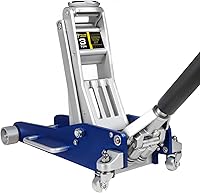
- 1.5 ton aluminum and steel jacks: about 7 to 10 oz. The BIG RED AT815016LR is this size, and its light frame needs little fluid to move the ram.
- 2 to 2.5 ton jacks: about 9 to 12 oz. These cover most family cars and small SUVs.
- 3 ton jacks: about 12 to 14 oz. The Yellow Jacket 3 ton full aluminum jack is in this band, with a 3.75 in to 18.9 in lift range and 6,600 lb capacity.
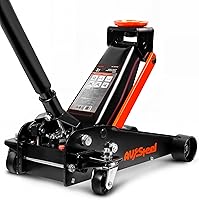
- 4 ton steel jacks: about 14 to 15 oz. The AV Steel 4 ton model is the heaviest here at 87.3 lb and carries the biggest reservoir.
These figures are close ranges, not exact factory fills. Jack makers build similar reservoirs, but the casting, piston size and body length all move the number a little.
How full should the hydraulic fluid be in a floor jack?
Fill the reservoir to just below the filler hole with the jack fully lowered. That is the level every jack maker expects you to keep.
Do this on level ground with the saddle all the way down. Remove the filler plug or cover and look straight into the port.
Fluid should sit at the bottom lip of the hole, and you should be able to see a thin film rather than a brimming pool.
If fluid runs out as soon as you pull the plug, the jack is overfilled. If you see bare metal at the bottom of the reservoir, it needs a top-off.
Don't judge by how the jack feels under load. A jack with too little fluid can still lift an empty saddle fine.
The port check is the only reliable read.
Why does a floor jack need the right fluid amount?
Too little fluid means the pump pulls air, and too much fluid has nowhere to go when the jack comes down. Both cause the same result: a jack that works poorly or leaks.
The fluid is what the pump pushes against the piston to raise the load. If the level drops below the pump intake, the pump sucks air instead.
The saddle rises slowly, feels spongy, and may stop partway.
Overfilling is the opposite problem. When you release the valve, the fluid returns to the reservoir.
A full reservoir leaves no air space for that return, so pressure pushes fluid past the seals or the filler plug.
A jack that won't hold a car up isn't always worn out. A low reservoir or a stuck release valve causes the same symptom.
Check the fluid level before you replace the jack.
How do you top off a floor jack's hydraulic fluid?
Lower the jack, clean around the filler plug, add a little fluid at a time, and stop at the port lip. This takes a few minutes and only needs a small bottle of jack oil.
- Lower the saddle fully on level ground.
- Wipe the filler plug and the area around it so grit doesn't fall in.
- Remove the plug or cover and look at the fluid level inside.
- Add hydraulic jack oil slowly, checking after each small pour.
- Stop when the fluid reaches the bottom edge of the hole.
- Wipe any spill, replace the plug firmly, and work the jack up and down a few times.
The up-and-down strokes move fluid into the piston and bleed air. Lower the saddle again and recheck the level after the first few cycles.
A syringe or a small squeeze bottle makes the job neat on jacks with a tight port. Pouring from a large bottle often spills more than it adds.
Which fluid should you use?
Use the hydraulic jack oil the maker specifies, and never brake fluid, engine oil or transmission fluid. A light jack oil flows well and keeps the seals happy.
Brake fluid is the worst substitute. It absorbs water and swells rubber seals, which turns a simple top-off into a rebuild.
Engine oil is thick enough to slow the pump on cold days.
Buy a small bottle of jack oil, not a large jug. Most jacks need only a few ounces for a top-off, so a 1 quart bottle lasts years across one or two jacks.
Which jack needs a top-off first?
The light aluminum jacks are easiest to handle, so they suit readers who check fluid often. The BIG RED 1.5 ton model weighs 31.5 lb and lifts from 3.5 in to 14 in.
Its low 3.5 in starting height clears low-profile vehicles, and the foam bumper on the handle helps protect paint. A lighter jack is easier to lay on its side for a fluid check, though you never need to turn it upside down.
Which jack suits a big truck and a bigger reservoir?
The AV Steel 4 ton model fits standard cars, SUVs, vans and pickup trucks, and its steel body holds more fluid than the small jacks.
It has a dual piston pump for faster lifting and a large 360 degree saddle. Its 87.3 lb weight means you'll want a firm, level spot to set it down when you check the port.
See how much does a floor jack weigh for more on matching jack weight to how you'll use it.
Which jack covers most family cars?
The Yellow Jacket 3 ton full aluminum jack covers family cars, SUVs and light trucks with a 6,600 lb capacity and a 3.75 in to 18.9 in lift range.
Its aluminum frame is lighter than an aluminum and steel jack, so it's easy to move to the fill spot. A large rubber saddle and a foam handle bumper come with it.
Its 3 ton rating leaves headroom over most passenger vehicles.
What are the signs of low or wrong hydraulic fluid?
Slow lifting, a spongy feel and a jack that won't hold a load are the main signs. Leaks around the piston or filler plug point the other way, to too much fluid or a worn seal.
Other things to watch for:
- The saddle rises partway and then stops with the handle still moving.
- The handle feels soft at the start of each stroke.
- The jack sinks slowly after you release the handle.
- Oil shows around the filler plug or on the jack body.
A jack that won't go down at all is a release valve problem, not a fluid one. Our guide to how to lower a floor jack covers the valve and the slow-lowering method.
If the fluid looks milky or dark, drain and replace it. Water in the oil comes from storing a jack in a damp spot.
Store yours upright and dry; how to store a floor jack covers the setup.
How much fluid should you buy and when?
Buy a small bottle of jack oil and expect to use only a few ounces per top-off. A 1 quart bottle covers many years of checks on one jack.
Top off only when the port check shows a low level. Normal use loses almost no fluid, so a jack that needs a refill every few weeks has a leak worth finding.
For a 3 ton jack like the Yellow Jacket, keep about 12 to 14 oz in mind as the working range. For a 4 ton steel jack, expect a little more.
For a 1.5 ton jack, a 7 to 10 oz range is typical.
Don't drain a jack just to measure its capacity. The port level tells you what you need without pulling the whole reservoir apart.
Frequently asked questions
Can I overfill a floor jack with hydraulic fluid?
Yes. Overfilling leaves no room for fluid to return when you lower the jack, so oil pushes past the seal or the filler plug.
Fill only to just below the port opening with the jack fully lowered, then wipe up spills.
What hydraulic fluid should I use in a floor jack?
Use the fluid the jack maker specifies, usually a light hydraulic jack oil. Don't substitute brake fluid, engine oil or transmission fluid.
The wrong fluid can swell seals and make the jack leak or fail to hold a load.
How do I know if my floor jack is low on hydraulic fluid?
The jack lifts slowly or only partway, feels spongy, or won't hold the vehicle up. A low fluid level is one cause.
Check the port with the jack lowered before you assume the jack is broken.
Do I need to remove the filler plug to check the fluid?
Yes. The filler plug sits on the jack body, often under a rubber cover or on the reservoir top.
With the jack fully lowered, remove the plug and look inside.
Fluid should reach the bottom edge of the hole, not spill over.